
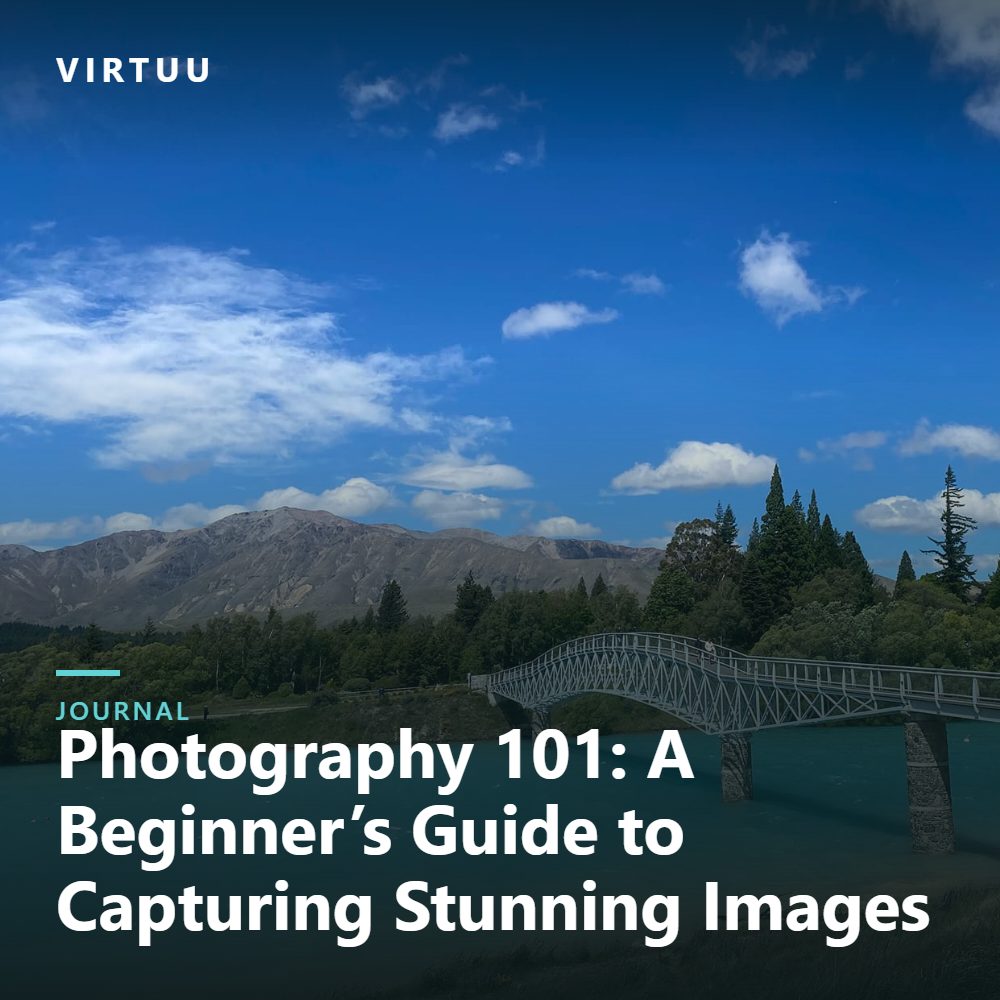
Photography is an art form, but it’s also a skill that can be developed with practice and knowledge. Whether you’re just starting out or looking to improve your photography game, understanding the basics will help you capture stunning images. This Photography 101 guide covers everything you need to know to get started, from camera settings to composition techniques.
1. Understanding Your Camera
Before you can take great photos, it’s important to get to know your camera. Whether you’re using a smartphone or a DSLR, understanding the key features will make a huge difference in the quality of your shots.
- Aperture: This controls how much light enters your camera. A lower f-number (e.g., f/2.8) gives a shallow depth of field (blurry background), while a higher f-number (e.g., f/16) provides a deep depth of field (more of the image in focus).
- Shutter Speed: This determines how long the camera’s sensor is exposed to light. Faster shutter speeds (e.g., 1/500) are ideal for freezing action, while slower speeds (e.g., 1/30) create motion blur, which can be used artistically.
- ISO: The ISO setting adjusts the sensitivity of your camera’s sensor to light. A low ISO (e.g., ISO 100) is ideal for bright conditions, while a higher ISO (e.g., ISO 1600) works well in low-light situations but may introduce noise (graininess).
2. Composition Basics: Framing Your Shot
The way you frame your subject can make or break a photo. Here are a few key composition techniques that will improve your images:
- The Rule of Thirds: Divide your frame into a 3×3 grid and place important elements along the lines or at the intersections. This creates a balanced and visually appealing composition.
- Leading Lines: Use natural lines, such as roads, rivers, or fences, to guide the viewer’s eye through the photo and toward the main subject.
- Framing: Use objects in your scene (like windows or arches) to create a frame around your subject, drawing attention to it and adding depth to your image.
- Negative Space: Don’t be afraid to leave empty space around your subject. This can create a sense of scale and focus attention on the main point of interest.
3. Lighting: The Key to Great Photos
Lighting is one of the most important elements of photography. Without good lighting, even the best composition won’t save your photo. Here’s what you need to know:
- Golden Hour: The soft, warm light during the hour after sunrise and before sunset is ideal for outdoor portraits and landscape shots. The low angle of the sun creates long shadows and rich colours.
- Natural Light vs. Artificial Light: Natural light, such as sunlight, tends to be more flattering for portraits. However, artificial light sources, like lamps and flashes, can help control lighting in a studio or indoor setting.
- Avoid Harsh Shadows: If you’re shooting outdoors during midday, the sun can create harsh shadows. Look for shaded areas or use diffusers to soften the light.
4. Focus and Depth of Field: Making Your Subject Stand Out
One of the key elements in photography is the ability to control what is in focus and what’s blurred out.
- Shallow Depth of Field: When your subject is in sharp focus while the background is blurred, it creates a sense of isolation and draws attention to the subject. This is ideal for portrait photography or close-up shots of objects.
- Deep Depth of Field: When everything in the image is in focus, it’s called a deep depth of field. This works well for landscape photography, where you want both the foreground and background to be sharp.
5. Editing Your Photos
Once you’ve taken your photos, editing is a crucial part of the process. Even if you’re shooting in RAW format, which preserves the most image detail, editing can help enhance your photos and correct minor issues.
- Adjust Exposure: Brighten or darken your photos to achieve the right exposure, making sure the details in both shadows and highlights are visible.
- White Balance: Ensure your colours are true to life by adjusting the white balance. This removes any colour tinge (like a blue or yellow cast) that may have been caused by the lighting.
- Cropping: If your composition isn’t perfect, don’t hesitate to crop your image. Just be careful not to lose too much resolution if you’re planning to print your photos at a large size.
- Sharpness and Clarity: Make sure your photos are sharp and clear. Adjust the sharpness settings and clarity to bring out the details in your image.
6. Experiment and Practice
The best way to improve your photography skills is through practice and experimentation. Don’t be afraid to try different techniques, camera settings, and compositions. The more you experiment, the more you’ll discover your own unique style.